Turning Pain Into Promise

What is Sickle Cell Disease?

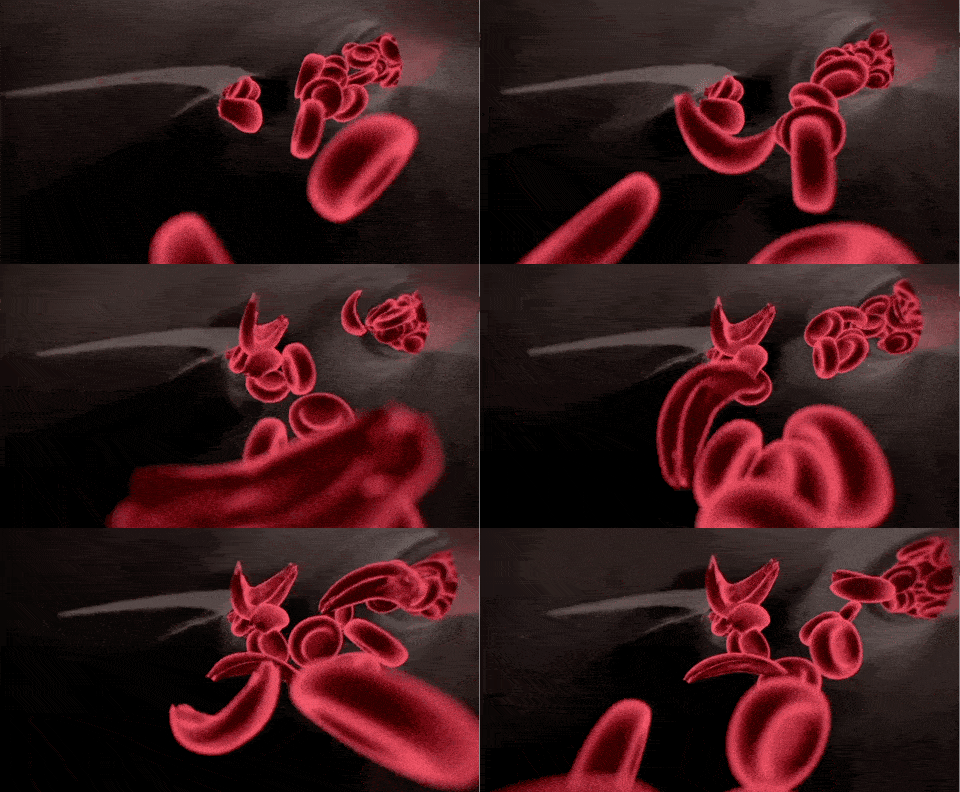
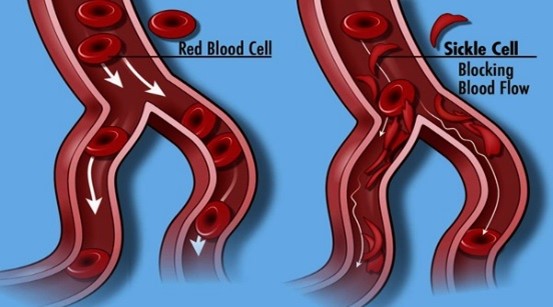
Sickle cell disease (SCD), also simply called sickle cell, is a group of inherited haemoglobin-related blood disorders. The most common type is known as sickle cell anaemia. Sickle cell anaemia results in an abnormality in the oxygen-carrying protein haemoglobin found in red blood cells. This leads to the red blood cells adopting an abnormal sickle-like shape under certain circumstances. With this shape, they are unable to deform as they pass through capillaries, causing blockages.

“Imagine your blood is like a smooth river inside your body. Healthy blood is like round, soft balls that float easily down the river to carry air to your heart and bones. 

But in some people, the blood changes. It becomes hard and sticky, shaped like a bent farm tool (a sickle) or a crescent moon. These ‘bent’ blood cells are like broken boats that get stuck in the narrow parts of the river. 

When these broken boats get stuck, they create a traffic jam that stops the blood from moving. This ‘jam’ is what causes the terrible, stabbing pain that people with this disease feel in their chest, arms, or legs”

Who We Are

The Sickle Cell Family (TSCF) is a national non-governmental organization dedicated to improving survival, dignity, and quality of life for people living with sickle cell disease in Tanzania. We work at the intersection of healthcare, community systems, education, and policy to ensure no life is lost due to preventable causes.
Why This Matters

Every day, children and adults living with sickle cell disease face preventable pain, complications, and early preventable deaths simply because essential care is unaffordable or unavailable. 

Daily medication (HYDROXYUREA & FOLIC ACID) costing less than TZS 1,500 (USD 0.58) could mean a lot between life and loss.

At The Sickle Cell Family, we believe no child should suffer or die because of poverty, lack of awareness, or weak systems.

What We Do

Sickle cell disease is a lifelong condition that requires continuous care, education, and social protection. Our work is organized around six strategic pillars designed to save lives and strengthen systems.

Our Partners